
 English
 Español
JingShi
JingShi
JingShi
JingShi
JingShi
JingShi
JingShi
JingShi
JingShi
Electrical installation work does not always happen beside a workbench. Cable trays, control cabinets, outdoor equipment, distribution panels, and field service locations can place the operator in tight or difficult positions. Such conditions have increased interest in the cordless wire crimper, especially for cable lug and connector applications.
Removing the power cord changes more than the power source. Tool positioning, access around cables, head movement, and battery capacity all become part of the working experience. The actual freedom depends on the tool's design rather than its cordless label alone.
Work Without a Fixed Power Point
Battery operation gives the operator more freedom around the work area. There is no mains cable running across the floor or extension lead restricting the working position.
- Outdoor installations: Useful around electrical cabinets, construction equipment, and remote connection points.
- Service vehicles: Suitable for cable work carried out directly beside machinery or equipment.
- Tight work areas: Battery operation removes the need to position the tool close to an electrical outlet.
- Temporary jobs: Operators can move between several connection points without relocating a powered workstation.
Some battery-powered hydraulic models use 18V lithium-ion batteries and provide crimping forces around 60–63 kN, with capacity reaching approximately 300 mm² depending on the configuration.
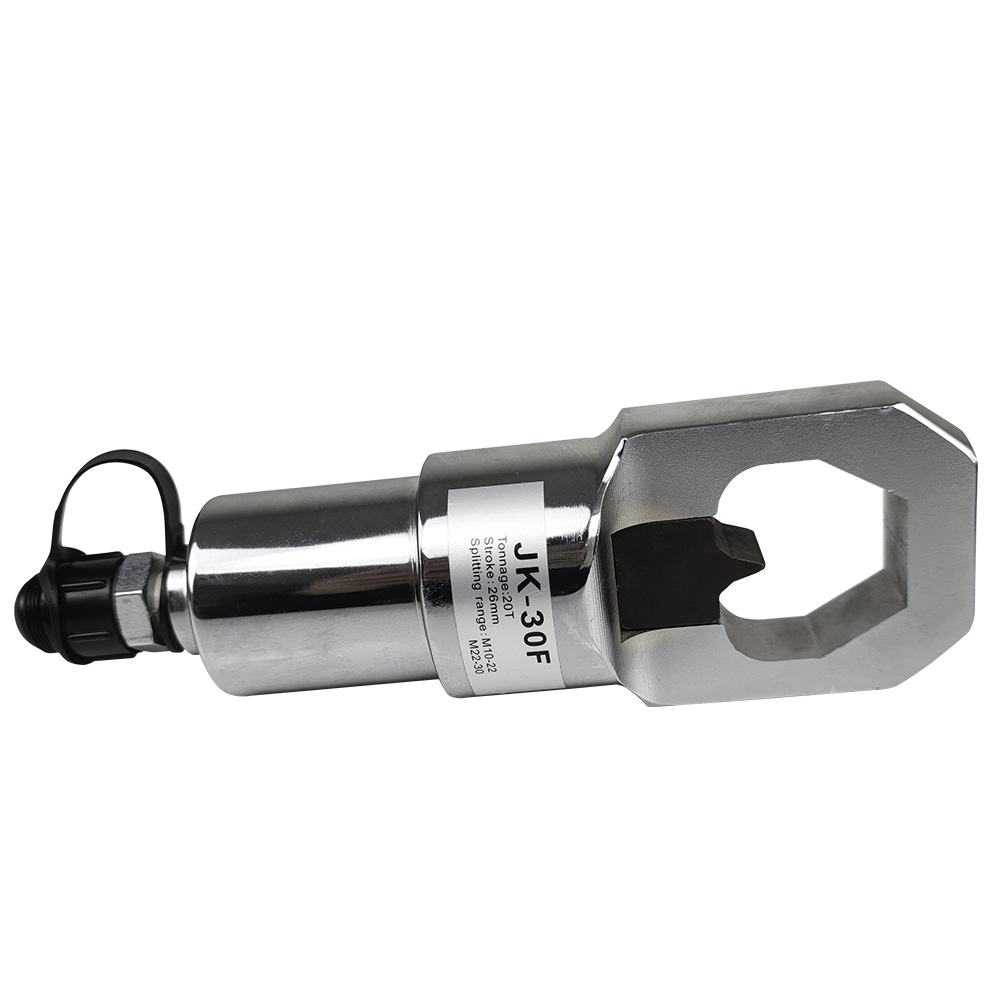
Head Movement Matters More Than Expected
Restricted access can make tool geometry just as important as electrical capacity. A fixed head may become awkward around large cable bundles, while a rotating head can give the operator additional positioning options.
Several cordless hydraulic designs use heads that rotate through 180°. Such movement allows the crimping head to approach a connector from different directions without requiring the entire tool to be repositioned.
Compact inline designs take this idea further. Narrow-body tools can fit into spaces where a conventional pistol-shaped tool may have limited clearance. Some models provide approximately 32 mm of opening while keeping the tool body relatively slim.
Battery Capacity Sets the Practical Boundary
Freedom from a power cable does not mean unlimited operation. Battery capacity becomes part of the tool specification, especially during repeated cable termination work.
- Voltage: 18V is commonly used across portable hydraulic crimping systems.
- Capacity: Battery packs around 5.0–5.2Ah appear in several professional configurations.
- Charge planning: Spare batteries can keep field work moving during extended installation sessions.
- Battery monitoring: Some advanced tools display charge status and operating information directly on the tool.
Published specifications show battery-powered crimpers ranging from compact 18V units to higher-force systems designed for larger conductors. Battery runtime therefore varies according to conductor size, crimping force, cycle frequency, and battery capacity.
Does Cordless Mean Suitable for Every Cable?
Portability should not be confused with universal capacity. Cable size and connector type still define the working range.
Some cordless hydraulic tools cover conductors from approximately 6 to 300 mm², while larger models can reach 400 mm² or even 630 mm². One published configuration, for example, supports up to 630 mm² with an 18-ton output.
Die configuration also changes the application range. A tool designed around interchangeable dies can accommodate multiple cable cross-sections, while dieless designs may use a different compression method. Users should therefore match the crimping method with the required connector specification.
Control Features Add Another Layer of Freedom
Modern cordless crimpers can provide more feedback than simple trigger-operated tools. Some models monitor pressure, battery status, temperature, or completed cycles through electronic controls and displays.
- Automatic release: Returns the mechanism after the required crimping cycle.
- Pressure monitoring: Helps track whether the hydraulic system reaches the required force.
- LED work lights: Improve visibility around connectors located inside cabinets or equipment.
- Rotating heads: Give users more positioning choices around cable assemblies.
Where Does Cordless Crimping Make the Biggest Difference?
The strongest advantage of a cordless wire crimper appears where access, mobility, and positioning matter as much as crimping force. Field electricians, maintenance teams, panel installers, utility workers, and equipment service personnel may benefit from a tool that can travel directly to the cable rather than bringing the cable to a fixed machine.
Real freedom comes from combining battery capacity, tool weight, head movement, crimping range, and connector compatibility. A cordless design removes the power cable, but these technical details determine how freely the tool can actually be used.