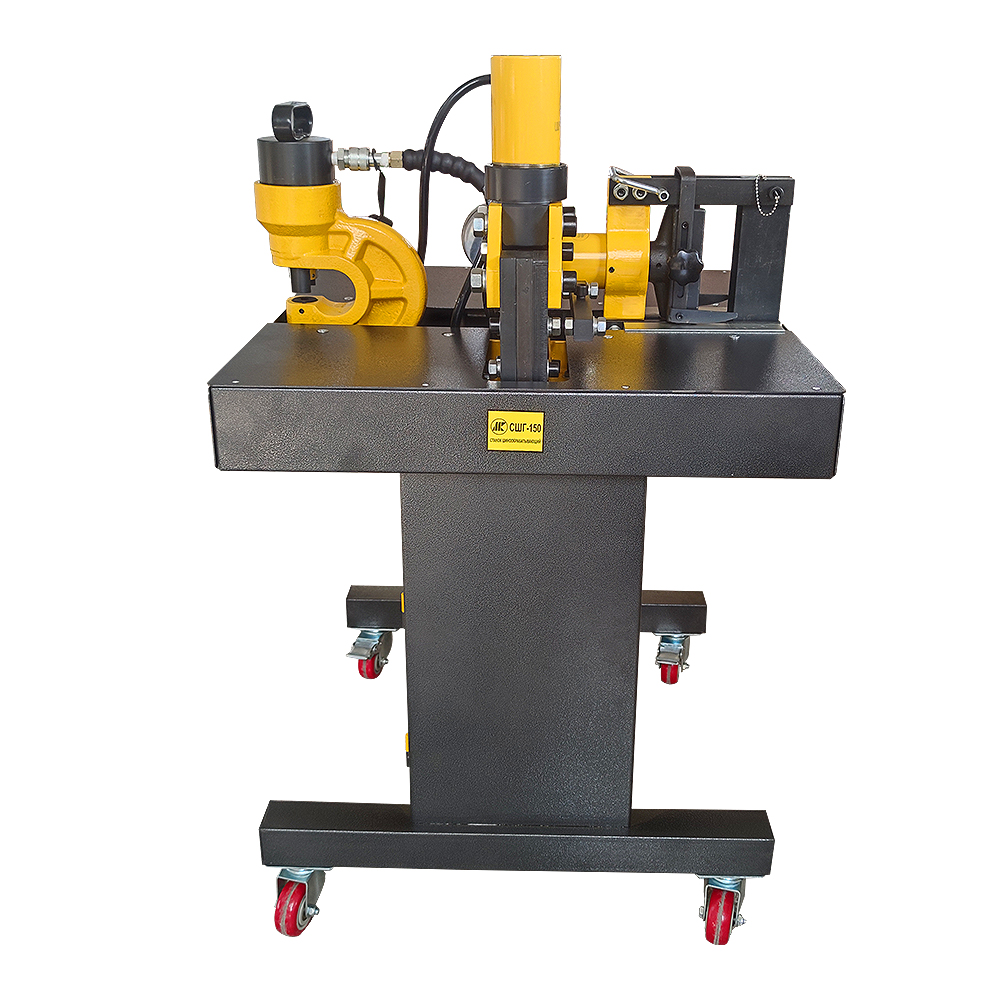
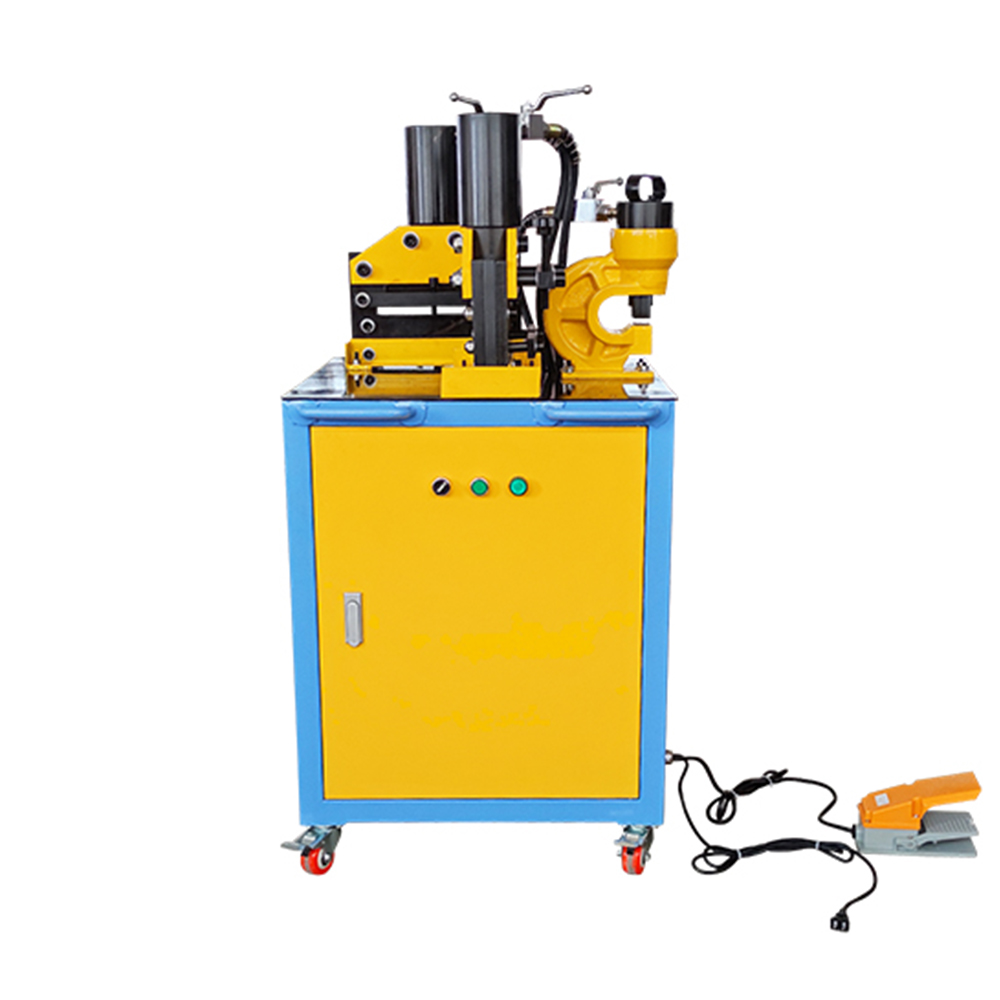
Busbars form the backbone of power distribution systems in switchgear, transformer stations, and electrical control panels. The equipment used to fabricate these components—busbar processing machines—has evolved significantly to meet demands for speed, precision, and repeatability. This guide breaks down the essential functions of these machines, from basic cutting and punching to advanced bending and value-added processes.
Core Functions: Cutting, Punching, and Bending
Most busbar processing machines are designed around three primary operations. Modern "3-in-1" units combine these functions into a single platform, allowing workshops to process copper or aluminum bars efficiently without moving material between separate workstations.
Cutting
The cutting operation shears busbars to the desired length. Quality cutting is about more than just separating material—the cut surface needs to be flat and free from burrs, droop, or waste to ensure a solid contact surface for electrical connections. Many modern machines use a double-column shear structure to achieve a clean, square cut without the collapse or deformation that older methods sometimes produce. Cutting capacity varies by model, with common maximums around 160mm width and 12mm thickness for copper or aluminum.
Punching
Punching creates holes—typically round or oblong—for bolted connections. This function requires precise alignment between the punch and die to avoid deformation around the hole. Many machines feature a rotary turret punch unit that holds multiple dies (often six), eliminating the need for frequent mold changes and improving workflow for batch processing. Some CNC-controlled systems include automatic positioning rulers that remove the need for manual marking, significantly improving accuracy in repetitive work.
Bending
Bending forms the busbar into specific shapes—L-bends, Z-bends, U-shapes, and vertical or horizontal configurations—to fit the layout of the switchgear or panel. This function must account for copper springback, where the material recovers slightly after the bending force is released. CNC-controlled bending stations address this with angle feedback systems that compensate automatically for springback, achieving precision of ±1° or better. Machines can handle complex geometries by changing molds for horizontal and vertical bending on the same unit.
Comparison of Machine Types
| Feature |
Portable / Split-Type |
Hydraulic 3-in-1 |
CNC Busbar Machine |
| Functions |
Cutting, punching, bending (separate units) |
All three integrated; simultaneous operation possible |
All three; automated positioning and angle control -- |
| Precision |
Lower; operator-dependent |
Good (mechanical stops) |
High (±0.1° to ±1° bending) -- |
| Springback Compensation |
Manual trial-and-error |
Manual adjustment |
Automatic, closed-loop feedback - |
| Ideal Use Case |
Repair work, construction sites, small batches |
General workshops, panel building |
High-volume production, certified work |
Additional Functions: Embossing, Marking, and More
Beyond the three core functions, many busbar processing machines can perform several value-added operations by changing molds or programming different cycles.
Embossing creates a localized raised pattern on the busbar surface. This improves electrical contact by increasing surface pressure at bolted connections or provides a base for marking. The stamping applies pressure to the material without cutting through it, leaving an indented or raised mark for identification or contact enhancement.
Marking, often combined with embossing, provides a permanent way to label busbars. On some machines, embossing tools can be customized to leave part numbers, batch codes, or orientation markers directly on the busbar surface. More advanced setups incorporate inkjet or laser marking for detailed identification, though this often involves a separate dedicated unit.
Additional specialized operations that can be performed on compatible machines include:
- Twisting: Used to modify the alignment of busbar ends, especially in compact spaces like vehicle installations
- Flattening and cable lug pressing: Prepares ends for connections or terminates busbars for cable attachment
- Strip and crimp operations: For insulated busbars, stripping insulation and crimping connectors can be integrated into the same workflow


 English
 Español